A sock is a sock is a sock…..right? (Wrong!)

Technology is a grand thing when it helps us do ordinary things in extraordinary ways. Socks are a great example of how technology has made the simple sock a not-so-simple choice.
I remember when I first started to backpack and my husband, Tim, insisted I buy my socks before I bought my hiking boots. I thought this sounded kind of backwards, but he was the expert. His explicit instructions were to get a liner and then a thicker outer sock made of wool. By combining these two different types of socks, it reduced the chances of a blister and made hiking with a heavy backpack more comfortable by providing some cushion. The wool socks at that time were itchy if you didn’t have a liner. They were also very good at wicking moisture away from the foot and providing a lovely cushion against the punishment of the hiking trails.
In decades of backpacking and hiking, I never developed a blister. My feet were plenty tired by the end of the day, but I never had a foot injury or even a hint of a blister. Boots with a perfect fit, laced up properly for the trail conditions and my magic pair of socks get all the credit. But that was the 1970s! What has technology done to socks in the past decade or so?
When we walk (or run or backpack) our foot strikes the ground with force. That force, especially over time, can cause painful injuries to not only the foot but also the ankle, knee, hip and back. Socks can help prevent those injuries by absorbing impact, controlling moisture, providing additional support and improving balance. Socks are not just a piece of stretchy fabric you slide onto your foot. They’re a key component of foot health!
By the way, if you’re in the habit of wearing socks inside, a word of caution. Walking indoors with ordinary, slick socks decreases your foot’s sensory input to the brain and actually increases the risk of slipping. If you want to wear socks indoors to keep your feet warm, consider ones that have a grip on the bottom like you might use for Pilates or that hospitals provide for their patients. Slip and fall is a very real risk as you age, so let’s eliminate those slip ‘n slide socks. Look for “sensory enhancing” or textured socks to give you brain better feedback and improve your walking pattern. Enough said…
Walking socks should have the following:
· moisture-wicking material
· targeted cushioning
· arch support
Material - I’ve had the best success with socks made from Smartwool merino wool. This material wicks moisture, keeps the foot at the right temperature and provides amazing cushioning. There are synthetic blends that claim to be effective but I’m a fan of keeping it natural where I can. Bamboo is another natural material that is increasing its presence in our clothing choices. I haven’t tried it. Merino wool is a natural fiber from Merino sheep (of course it is... what else would they be named?). This fiber is much softer and finer than traditional sheep’s wool. This avoids that itch that was so annoying in my 1970s outer sock for hiking. Avoid cotton because it traps moisture which can lead to blisters and unhealthy foot conditions due to the build-up of moisture inside your shoe. Plus, the smell of a damp cotton sock could knock over an elephant from 50 paces. The merino wool resists those odor-causing bacteria providing a healthier environment for your feet.
Targeted cushioning – Depending on the activity, you may experience more pressure on either the ball or heel of your foot. Many good socks have extra cushioning at both the front and back of the foot, so it covers the cushioning areas. The goal of cushioning in your sock is to reduce the load on your plantar. This is a thick, web-like band of tissue that runs across the bottom of your foot. It connects your heel bone to your toes and acts like a shock absorber on your car to support your foot. Plantar fasciitis is a common ailment which causes pain if the plantar becomes strained or irritated. There are some good exercises to deal with food discomfort which I will share in a separate blog. For now, just know that cushioning in your sock will go a long way toward preventing injury to the plantar.
Arch support – Don’t get me wrong. No sock can provide the kind of arch support that comes from a properly fitted, well-designed shoe. However, socks with arch support can add light pressure around your midfoot which helps with feeling secure and stable. That snug fit around the arch can also improve blood flow and help if you spend long hours on your feet. I’ve found that my socks with arch support are surprisingly effective at helping with my ultra-high arches. If you feel like you need additional arch support beyond your shoe and sock, be sure to consult a qualified medical expert to see if insoles would be helpful. Socks won’t do it all, but I believe they can help.
Misc. – Socks with no seams are best because they don’t create additional pressure on small areas of your foot. In my research, I found socks that are specifically made for the right or left foot but haven’t tried them. I know that Pilates socks where there is a grip texture on the bottom are made for specific feet, but I haven’t seen them for other exercise forms. Like everyone else, my socks tend to lose their partner when coming out of the dryer so once I find ones I like, I try to buy multiple pairs of identical socks. Makes life simpler!
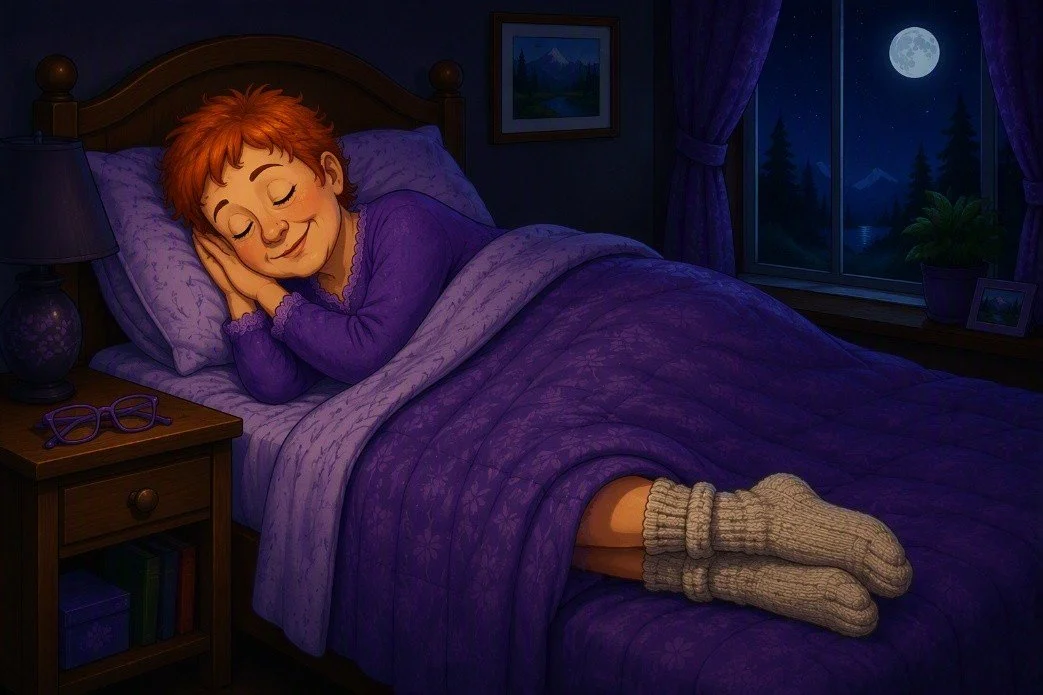
Fun Fact – Wearing socks to bed warms your feet, which in turn causes your blood vessels to widen (vasodilation). Wider blood vessels let your body release heat. As it turns out, warm feet equal a cooler core body temperature because of this vasodilation. The Cleveland Clinic actually confirmed that warming your feet shortens the time it takes to get to sleep. Dr. Aparna Bhat, MD, explains that our circadian rhythm runs in parallel with our sleep/wake cycle. Throughout the day our core body temperature rises as we move around. The brain needs a lower core body temperature to help get to the sleep part of your natural cycle. Wearing socks actually helps lower our core body temperature. It can also help reduce hot flashes. It’s counter intuitive, I know, wearing socks to bed modulates your body temperature which is a key component in healthy sleep. It’s not for everyone but it’s worth a try.
Bottom line – socks matter. Treat yourself to socks that not only look good but help with your overall journey to wellness.