Pilates Might Become Your Pal
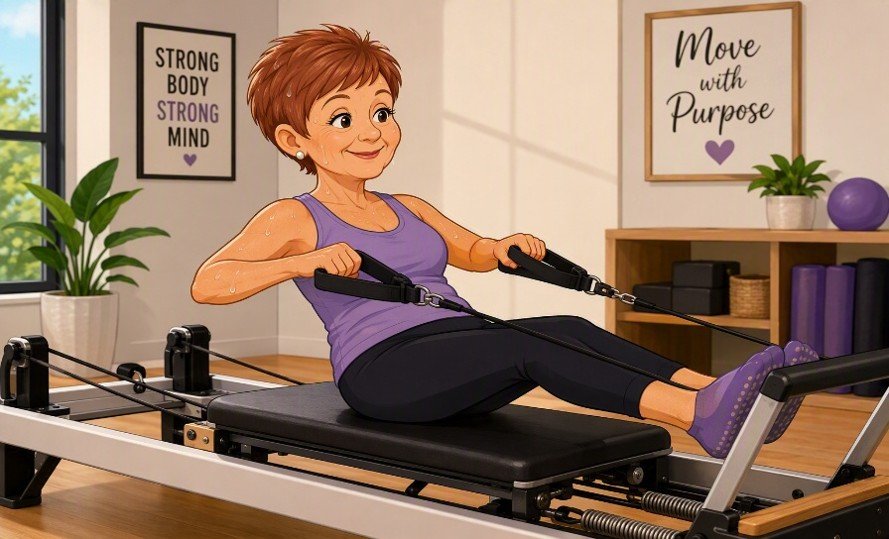
Everyone has probably heard of Pilates. This form of exercise started to get popular around the late 1990s and exploded onto the global exercise scene in the early 2000s. The origins of Pilates go back much further, all the way to World War I. The creator, Joseph Pilates, was born in Germany in 1883 and overcame a sickly childhood through a combination of yoga, boxing and gymnastics. During WWI he was interned in a camp in England where he rigged the bedsprings from hospital beds to use in conditioning himself and fellow prisoners. These bedsprings became the foundation for the modern “reformer” machine.
After the war he and his wife arrived in New York City, ready to start a new life. Little did he know that his jerry-rigged bedspring contraption would evolve into a worldwide movement. His first paying students were mostly dancers from the New York City Ballet. By focusing on deep core muscles, control, breath and flow, his methods were popular with dancers including the legendary Martha Graham. Using his system allowed dancers to recover more quickly from injuries and to extend their careers.
Word of the benefits of this system spread gradually not only through the entire dance world, but on to gymnasts and actors until 50+ years later when the rest of us caught on.
In today’s world, it sometimes seems like there’s a Pilates studio in every mall and gym in the country. If you go abroad to Europe or Asia, you’ll discover their popularity in those locations. Almost half of the global Pilates studio market share is outside of the USA.
I’ve become a fan of Pilates over the past 2 or 3 years, but especially over the past year. As a trained martial artist, I had a strong preference for any form of exercise that kept me on my feet. I thought that any exercise where you’re laying down couldn’t be that beneficial. How very wrong I was! Elite NBA players like LeBron James, Giannis Antetekounmpo, Dwayne Wade and Ben Simmons credit Pilates with helping with their flexibility, stability, core strength and high-quality controlled body movement. You can find videos online of these famous athletes putting in some hard work on the Reformer and the Cadillac.
Here’s a quick description of the two most popular Pilates machines. The Reformer is by far the most popular piece of equipment in a pilates studio. The flat cushioned carriage slides back and forth on wheels inside a frame. There are straps, pulleys and multiple springs that can be engaged or disengaged to change the resistance from very low to very high.
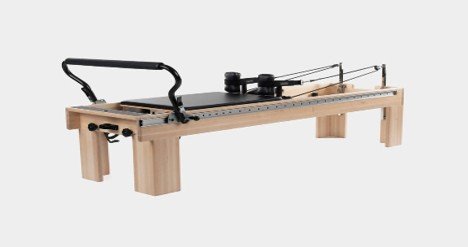
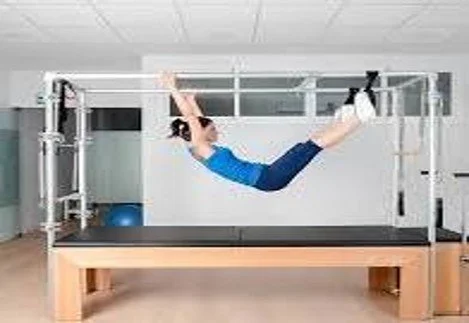
The Cadillac is a large, raised rectangular bed surrounded by a large frame that has bars, loops and springs. This piece of equipment adds gravity suspension as a challenging element. There’s a variation of the Cadillac that is also popular called the Tower. Below is an illustration of the Cadillac being used in a way that adds gravity as part of the routine.
There are home versions of these machines but if you’re going to explore Pilates, it’s best if you start by going to a studio with a great reputation for providing high-quality instruction. Ask your friends or your favorite physical therapist for a referral. Classes aren’t cheap and private sessions with good instructors are even more expensive. Franchises like Club Pilates probably offer the best value with their monthly rates but you do have to be careful about the quality of the instructors wherever you go for instruction. If at any point you don’t feel safe doing an exercise on these machines, trust your instincts and stop before you get injured. Ask for personal attention to keep you safe and comfortable … and if you don’t get it … leave.
Why am I a personal fan of Pilates as one form of exercise? I love that I can focus on very small movements to move every part of my body. There are countless exercises for just the feet that challenge everything from my toes to my heels. Given how important foot health is to maintain balance and ease of movement as I age, these exercises alone make it worthwhile to me. This system has built my core strength and stability because everything you do on the Reformer includes a focus on engaging those important core muscles as well as proper breathing. I’ve been able to get much more flexibility and strength in my shoulders over the past several months by doing pullups on the Reformer.
One of my favorites is when we replace the foot bar with the mini trampoline. I get to “jump” without the hard landing. Great cardio! I get muscle movement against resistance provided by the springs without the strain and stress on my aging joints. And, if my energy level is a little lower on certain days, I can adjust the resistance of the springs or cords, so I still get an effective workout with less energy output. I love working my muscles to the point of fatigue but knowing that I’m still mostly safe from injury.
If you’re not a fan of using machines, there is a variation using only a mat and other smaller pieces of equipment to help focus movement. The short video below is using something called the “magic circle”, aka a fitness ring. It was designed by Joseph Pilates to intensify working the inner and outer thigh muscles as well as arm, chest and core strengthening. If you put this circle around your knees or ankles and do sit-to-stand exercise, you can really feel those adductors going to work. My own experience is that this one piece of equipment helps keep good alignment between hips, knees and ankles when doing certain movements.
I hope that if you haven’t tried Pilates and you’re thinking of getting back into a good exercise routine, you’ll consider it. Classes can bring an opportunity to connect with old friends or make new ones to share the journey toward fitness. I’d love to hear your experiences and thoughts on Pilates. Remember, Pilates just might become your best Pal.