Sleepy, sleepy, you are getting sleepy …. (you wish!)
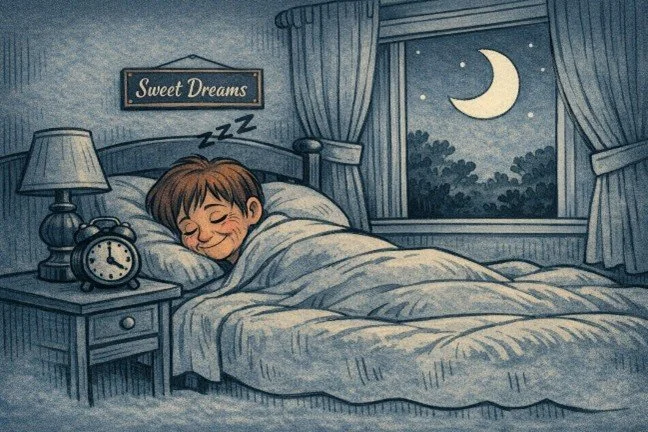
As a teenager I always needed an absolute minimum of 8 to 10 hours to avoid being a zombie the next day. Falling asleep and staying asleep was always easy for me. Even in the dead of winter when our poorly insulated farmhouse was oh so cold in the mornings, my sister and I would jump out of bed and run out to get dressed by the oil burning furnace that heated our house. Going to sleep and waking up were easy. And, I was a deep, deep sleeper. As a joke, my dad once set off a firecracker under our bedroom window, but I didn’t even stir when it went off.

During the years I travelled with Up With People, sleep became harder to come by. Part of it was the incredibly busy schedule we kept. Between rehearsing, performing, doing school visits, meeting with community leaders, promoting the shows, spending time with our local hosts and keeping up with my duties as the secretary/assistant to the musical director, our schedules sometimes allowed little time for sleep. I learned to catch naps on the UWP buses or even on top of the large wood boxes in which we carried the miles of microphone and lighting cables needed for our shows. I could literally fall asleep anywhere and anytime to try to catch up. For many years after I stopped travelling with UWP, I could look at a bus and feel myself getting sleepy!!
Once I got married and settled into a more normal routine with normal office hours my ability to sleep a full 8 hours came back and it was pretty rare that I woke up with a fuzzy head. When children came along, I learned to get by on either a lot less sleep or on sleep that was interrupted pretty much nightly. I think anyone who has been parent understands that’s something that just comes with parenthood. My children have been adults for many years now, but I’ve never quite gotten back to the ability to sleep 8 hours and wake up feeling refreshed. And, in the past decade or so my sleep has become less restful. It’s harder to get to sleep, much harder to stay asleep and I frequently wake feeling less than fully refreshed. There are times when I think my sleep is only 3 or 4 hours. I seem to be able to function fine on less sleep, but it is a source of concern to me. I’ve consulted and researched how to get healthy sleep and I’m applying some of what I’ve learned with mixed results so far. There are some recommendations that are both scientific and consistent, so here is a quick summary.
Environment – Your sleep environment is critical to healthy, restful sleep. The components of a healthy environment include:
DARK
QUIET
COOL TEMPERATURE
DUST FREE
COMFORTABLE MATTRESS
COMFORTABLE BEDDING
PILLOW THAT SUITS YOUR SLEEP STYLE
Routine – Establishing a set time to go to bed and to get up helps train your mind and body to understand what’s expected. Doing the same series of small, stress-free tasks also helps slow down your brain waves and heart rate so you can fall asleep and stay asleep. For at least an hour before bed, avoid blue light from your screens. Mediate, journal, read a paper book … avoid those screens! When you can establish a healthy circadian rhythm, healthy sleep will follow. Let’s explore this all-important factor a bit before going on.
Many of us associate circadian rhythm with sleep. However, it’s SO much more than that. Circadian rhythm helps regulate body temperature, influences appetite, and helps govern the release of hormones like melatonin and cortisol. The brain’s master clock (AKA suprachiasmatic nucleus or SCN) responds primarily to light, so the SCN keeps us awake and alert during the day and asleep at night. While the circadian rhythm is an internal function in the SCN it is highly influenced by external factors like light, food intake and physical activity. For example, when your brain perceives light, the production of melatonin is stopped making it very difficult if not impossible to stay asleep. Newborn babies have no circadian rhythm which is why they don’t seem to sleep on a regular schedule. It can take considerable time and effort to train them, as most sleep deprived parents can relate in painful detail! Circadian rhythm is critical to healthy sleep so for more information, please go to my.clevelandclinic.org/health/articles/circadian rhythm. Lots of great information there!!
Diet – Avoid caffeine and alcohol for at least 3 hours before bedtime. Avoid heavy protein and fat intake for at least the same amount of time before bed as those take much longer for your stomach to digest (see prior blog for more details).
Hydration – Cut off your liquid intake about 3 hours before bedtime to avoid the necessity of getting up in the dark to empty your bladder.
Bed is for S&S – If you wake up and can’t get back to sleep, experts tell you to get out of bed and go read a boring book elsewhere. Bed is for sex and sleep. It’s not a place to lay awake and stress about … well …. Anything. This part is especially difficult for me because I don’t want to disturb my husband. However, I have found that when I follow this advice, I tend to worry less about not sleeping and am able to let fatigue take over, slip back into bed and into “dreamland”.
Some of Priscilla’s tips to getting healthy sleep:
Dark – Any light makes it much more difficult for the brain to keep producing the melatonin that is so critical to healthy sleep. In my bedroom, we have lots of windows to take in the incredible view of the Santa Monica Mountains. We’ve never put up shades or curtains to avoid blocking that view. Therefore, light tends to seep in, especially if the moon is out. I find it helpful to use a silk sleep mask with an adjustable elastic band to block the light without waking up with “hat hair”.
Quiet – This can be harder to control. I’m very lucky that in our home, the loudest nighttime noise is my husband snoring. …. Hhmmm … actually, that can get pretty loud if I’m honest. Luckily, our adjustable bed has been helpful in minimizing that problem. My daughter has used noise cancelling ear buds or headphones with limited success. Others use white noise machines with varying degrees of success. I don’t have a magic good-for-all answer to this one except to say that our survival instincts tell us to wake up when unfamiliar noises filter into our bedrooms.
Temperature – Scientists generally recommend a bedroom temperature of between 60 and 67 degrees F for optimal sleep. This allows our body temperature to drop which is so critical to getting to sleep and achieving that deep REM we all need. I like to have fresh air circulating so I prefer to sleep with a window open. I also use bed linens and pajamas of natural fibers to help keep body temperature down. In the winter, I have a lovely soft comforter for lightweight warmth. Many have had success with weighted blankets, but I find them too restricting.
Mattress – This is such a personal choice that I’ll simply share that I have a Sleep Number bed and put a memory foam topper on it. Sleeping with the head of the bed in the snoring position has helped me get better sleep for some reason. And – call me crazy – but I think I sleep better when my head is to the north. I haven’t found any scientific studies that provide a firm basis for which direction is “best” so – again – go with what works for you.
Routine – I stop watching television or doing my brain training video games around 9:00 pm and have pretty much the same routine. I lock the doors, turn out the lights, brush my teeth, do my facial skincare routine, slip into my jammies and read a book until I fall asleep. I recently made the mistake of reading a thriller called “Remote Control” by Paula Bernstein. Whatever you do, don’t do that! It was a real page turner, and I wound up reading until 2:00 AM and then finishing it the next day. Luckily it was a weekend so I could take a nap in the afternoon!
Diet – I’ve tried taking melatonin but have not found it to be helpful. I do find that a cup of chamomile tea about an hour before bed is a lovely, if not consistent, part of a nightly routine. I need to get better at that. I avoid eating anything solid after 6:00 pm in the evening while I’m on my journey to less and plan to continue that in the future. I thought I’d get hungry before bed, but that has turned out not to be the case.
Essential Oils – None of the research I did spoke about our sense of smell, but I have found that using an essential oil like lavender either as a linen spray, in a body lotion or – best of all – in a diffuser really helps me relax and get to sleep. I set my essential oil diffuser to turn off in one hour. I don’t think I’ve ever heard it go off, even though I know it emits a small beep when it shuts off. I’ve also used eucalyptus oil with good success in my diffuser. When I travel, I have a small one I take with me along with a small vial of oil which I can put onto my wrists.
Well – there you have it – my personal experience with sleep. I need to get better at the healthy part of sleep, but I’m not going to stress about it because that would be completely counterproductive, right? I hope that some of you will share your own challenges and successes. Has anyone used one of the sleep apps with success? I’m curious.