Fabulous Fiber
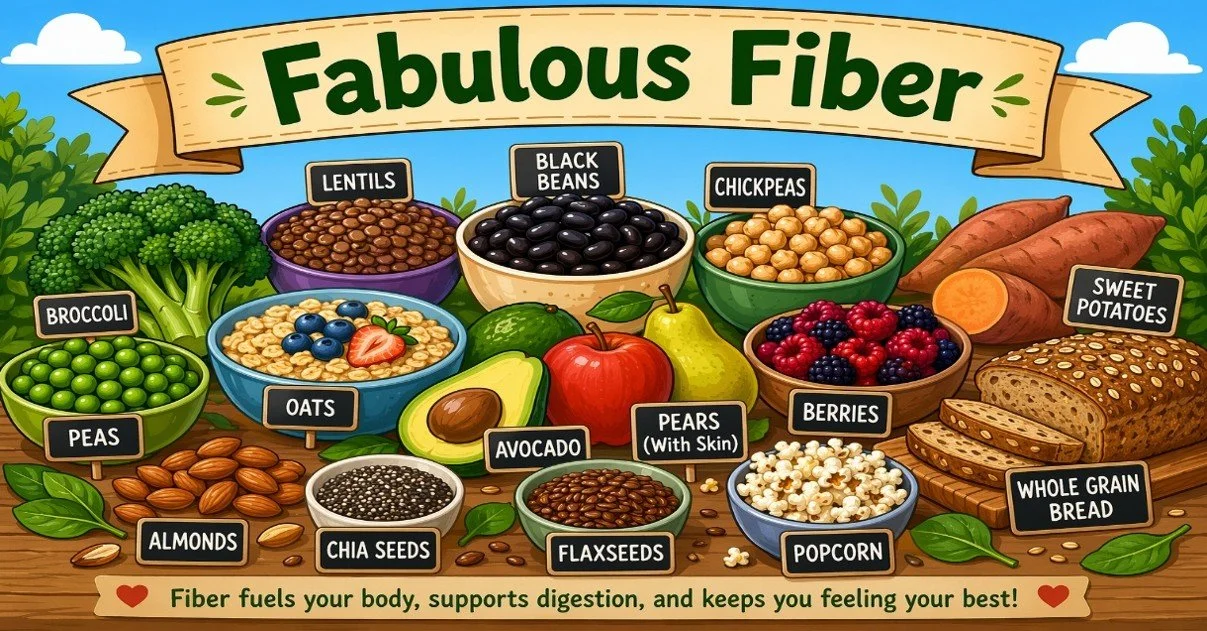
Fiber. We hear about the importance of getting enough fiber, but what is it really? According to the Mayo Clinic, fiber is “an indigestible carbohydrate found in plant foods”. Wait a minute … indigestible?? Why would anyone want to eat something that our bodies literally cannot digest?
There are several reasons why having enough fiber and a variety of different types of fibers in our diets is critical to good health. Some fibers help keep stool moving in the large intestine. Remember that the longer waste material hangs out in our large intestine, the more water is absorbed and the more solid the waste material becomes, making it harder to move it onward and outward. Other types of fiber help us feel full for longer periods of time. This can result in consuming fewer calories and maintaining or reducing our weight. Still other types of dietary fiber have been linked to lower levels of heart disease.
There are soluble fibers which dissolve in water and insoluble fibers which do not dissolve in water. Soluble fibers form a gel-like substance in our digestive tracts that slows digestion. This not only improves blood sugar but helps food move through the gut at just the right pace. Too fast and we don’t have time to absorb the important nutrients from our food. Too slow and we can develop constipation. Soluble fiber helps maintain the right balance, so we don’t suffer from either of those afflictions.
One example of a soluble fiber is oatmeal or oat bran. Oats have a specific type of fiber called beta-glucan which binds to cholesterol in the digestive tract and carries it right out of the body. That can be helpful in maintaining a healthy cholesterol level. Other foods with soluble fiber include apples, beans, nuts, sweet potatoes and lentils. All yummy foods if you ask me so I’m happy about soluble fiber sources.
Insoluble fiber is another food source for the good bacteria in our intestines. Perhaps the most important role for insoluble fiber is to add bulk to our stool and prevent constipation. Some of the best sources for insoluble fiber include wheat bran, whole grains, leafy greens, nuts and seeds, and fruits with edible skin like apples and berries.
For women, the Mayo clinic recommends 21 grams of fiber every day for women over age 50 and 25 grams for women under age 50. Men have a higher recommendation for fiber intake. For men under 50, the recommendation is 38 grams and those older than 50, it’s 30 grams per day. Interesting that many men I know are more carnivores than herbivores, so their challenge is to overcome their love of meat in order to get enough healthy fiber on a daily basis.
If you’re saying to yourself, WOW, I need to consume more fiber, there’s a caution. If you immediately begin to take in significantly larger amounts of fiber, your digestive system may not react well. From the research I’ve done, the recommendation is to increase gradually. Also, be sure to consume enough water daily. It’s the same thing with exercise, right? You wouldn’t go from a sedentary lifestyle to running a marathon without risk of serious injury. If you decide to increase your fiber intake, consider starting your day with cereal or whole grain bread that contains 5 grams or more of fiber per serving. If you’re having cereal, top it with berries or bananas. When looking at the ingredient list on bread, for example, be sure that on the nutrition list whole grains are listed first.
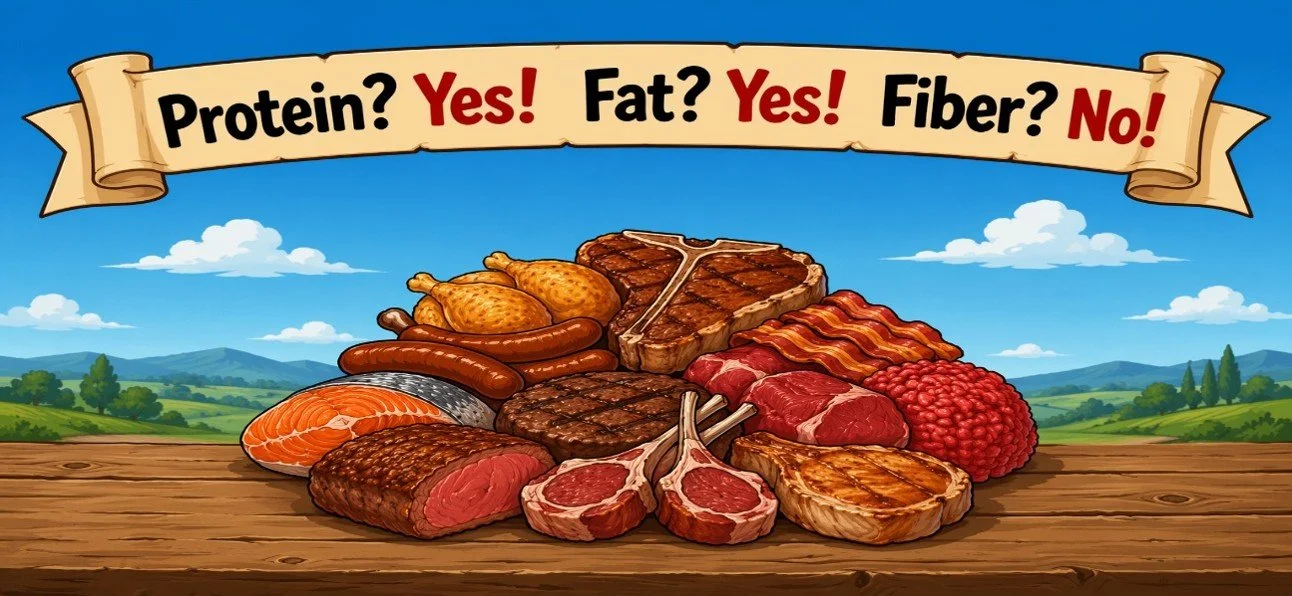
For lunch, maybe add some raw carrots and hummus to your regular lunch. Consider having a leafy green salad with some tuna or hard-boiled eggs for protein. In our quest to get enough fiber, let’s not forget those all-important protein sources. By the way, animal meat contains no fiber whatsoever. None, Nada. Protein? Yes. Fiber? No Fat? Yes Fiber? No. Got it? Animal meat has no fiber.
Another helpful hint on salads for lunch is that the dressing we add can be a hidden source of calories. I’m using either much less dressing or none. I’ve found that adding a small amount of pickled red cabbage from a jar adds a punch of flavor and moisture in lieu of a dressing with the wrong kind of fat and sugar. It’s surprising how many salad dressings have added sugar. Check those labels to be an informed consumer!
For dinner, adding broccoli, cauliflower, cooked peas or beans, artichoke, sweet potato or any of the many other vegetable and fruit choices will get you to that daily fiber intake goal. By the way, I’m doing some research on the benefits of limiting the number of hours in which we consume food daily. It may be that limiting food consumption to a 10-hour period, eating only between the hours of say 8:00 am and 6:00 pm is beneficial. More to come on that topic. The message, try to avoid those late-night dinners regardless of what you’re consuming.
Whatever you eat and whenever you eat, think of fiber as your fabulous friend. It keeps you out of trouble and provides a wide variety of taste and texture. Fiber is never boring and is a great companion throughout the day. Enjoy!