Feeding Your Beneficial Gut Bacteria with Prebiotics
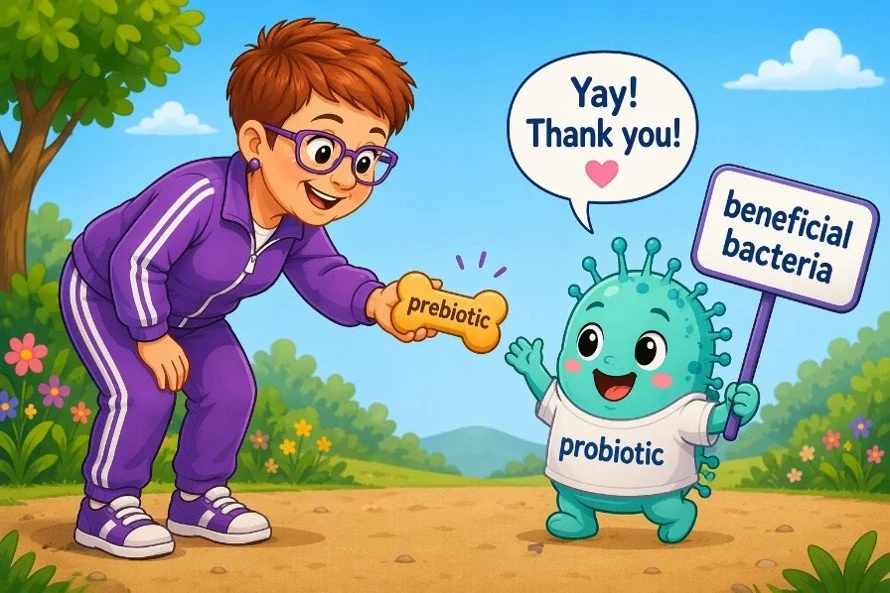
Prebiotics, probiotics, antibiotics, … all these names might grab our attention but without more information it’s just a list of names of things we may neither understand nor appreciate. Let’s start with prebiotics.
These are types of fiber and carbohydrates that are indigestible. That’s right. We need them, but we cannot digest prebiotics. They travel right through the upper digestive tract in a path to the lower digestive tract where the prebiotics serve as food and fuel for the beneficial bacteria that live there. These beneficial bacteria are called probiotics. According to the article on the Harvard Medical School’s Healthy Publishing website, our gastrointestinal tract contains about 100 trillion microorganisms, mainly bacteria. I have no clue how they counted up to 100 trillion but it’s Harvard Medical School, so I’m just going to go with that number for now.
In our entire digestive system (see blog of 3/20/2026), there is an interactive, interdependent environment called our gut microbiome. Prebiotics have a very specific role in maintaining a healthy microbiome. When prebiotics are broken down by our gut bacteria, they release short-chain fatty acids (SCFAs) that help our ability to absorb critical minerals like calcium. If you’re losing bone density, one of the corrective steps you might take is to check your intake of prebiotics.
SCFAs also nourish the cells lining our gut which will not only increase the absorption of calcium but provide nourishment to the cells that line our gut which will, in turn, aid in the reduction of inflammation while boosting overall immune function. Many harmful bacteria are destroyed in our digestive system so keeping that lining in good shape is critical to good health.
You might get your prebiotics from supplements you see in health food stores but if you want to go to natural sources, look for any of the following:
Vegetables like onions, garlic, leeks, asparagus and chicory root
Fruits like apples, berries and slightly green bananas. Can’t say I recommend the texture or flavor of a slightly green banana, but according to my research it’s a good source of prebiotics.
Legumes and whole grains like beans, lentils, oats and whole grains.
If you decide you want to measure your prebiotic intake more precisely, look for any of the following labels on your supplements:
Inulin
FOS (fructooligosaccharides)
GOs (galactooligosaccharides)
Acacia gum
Wheat dextrin
Here’s the problem with trying to measure your intake of prebiotics … or probiotics for that matter. According to the Mayo Clinic and Cleveland Clinic websites, there has not been enough scientific study done to come up with recommended dosages. The most consistent recommendation I’ve seen so far is a minimum of 3 servings of fruit or vegetables every day. That’s basically a minimum of 1 serving per meal. It’s these high fiber foods like fruit and vegetables that contain essential prebiotics, as well as probiotics and many other healthy things.
Is there a downside to ingesting prebiotics? Not that I’ve been able to find. There have been reports of infections in premature infants being given probiotics. Much more study will be needed to get consistent guidance from the medical experts on the topics of how much prebiotics should be a healthy target. There is also a recent study showing that people who consumed 30 grams of preobiotics every day for two weeks were more likely to select low calorie foods over high calorie ones. Maybe they were so full from all the fruits and vegetables they didn’t have room for chocolate or a craving for a Big Mac? That’s just wild speculation on my part.